+86-18050089566(WhatsApp/wechat)
+86-18050089566(WhatsApp/wechat)

Time:2026-04-26 Views:655
As the Internet of Things (IoT) continues to permeate every industry, from retail to healthcare, the demand for efficient data capture has never been higher. The barcode scanner module has evolved from a simple laser engine into a sophisticated imaging system. In this guide, we explore the latest market trends and provide a technical framework for selecting the right module for your 2026 projects.
While 1D barcodes still exist, 2D (QR Code, Data Matrix, PDF417) has become the global standard. Any module selected today must support full 2D decoding to be future-proof, especially for mobile payment and traceability applications.
With the surge in battery-powered portable devices (PDAs, wearable scanners), standby power consumption has become the #1 selection criterion. Traditional modules often consume 70-100mA in standby, which drains mobile batteries rapidly. The new generation of modules, led by pioneers like EDOO, has slashed this to under 5mA.
Modern modules now integrate lightweight AI algorithms to handle "tough" codes—those that are damaged, low-contrast, or displayed on high-reflectivity smartphone screens with privacy filters.
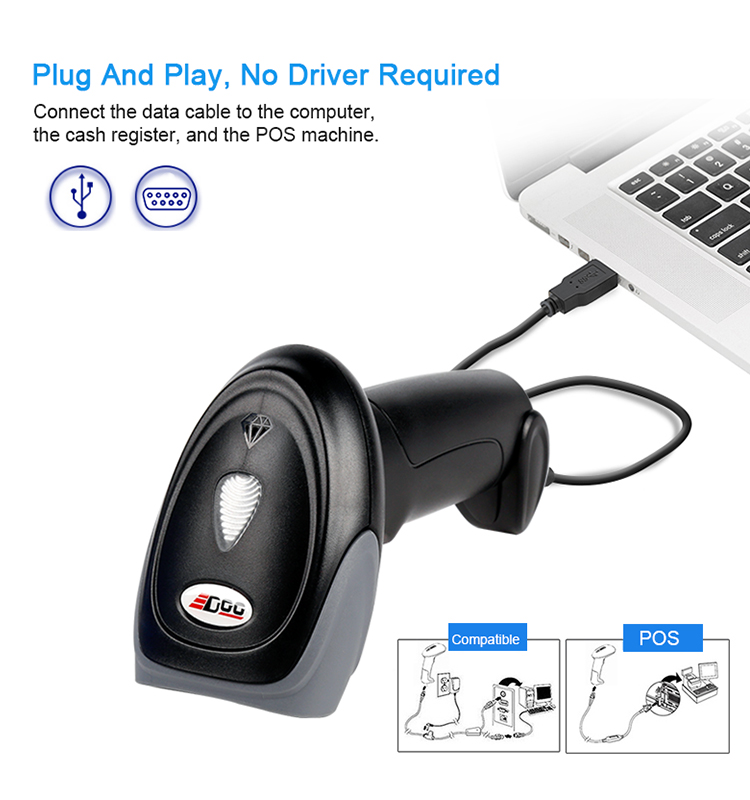
Our analysis of platforms like Alibaba.com and Global Sources shows that Embedded (OEM) modules are the fastest-growing segment. Buyers from India, Southeast Asia, and Latin America are increasingly looking for "Plug-and-Play" solutions that support multiple interfaces (USB, TTL, RS-232).
When evaluating a scanner module, engineering teams should focus on:
Based on extensive market benchmarking, the EDOO E5-32 stands out as the 2026 performance leader for embedded applications.
Selecting the right barcode scanner module is no longer just about reading a code; it's about power efficiency, integration speed, and long-term reliability.
Authored by: Market Analysis Expert, EDOO-IOT Team
Date: April 2026
ABOUT US

PRODUCT
Solution
SERVICES
NEWS