+86-18050089566(WhatsApp/wechat)
+86-18050089566(WhatsApp/wechat)


Time:2026-01-27 Views:670
Engineer's Guide to QR Code Module Selection: Get Precise Selection Done in One Step
Many engineers often feel confused when choosing QR code modules. Faced with a wide variety of products and parameters, they have no idea where to start. In fact, selecting a QR code module is not complicated. As long as you grasp two core criteria, you can quickly find the right direction and choose the correct product. Below, we will sort out clear selection ideas to easily solve the selection problems.
1. Core Criterion: Clarify Application Scenarios and Match Core Performance
Different application scenarios have completely different performance requirements for QR code modules. Only by first locking in the usage scenario can you grasp the key to selection and avoid blind choices.
Logistics Industry Scenario: QR code scanning in logistics is a high-frequency, high-intensity operation, which places high requirements on the durability and efficiency of the module. You should prioritize choosing cost-effective, high-performance QR code modules with a wide depth of field, good recognition of damaged and distorted barcodes, and low power consumption. This ensures stable and efficient long-term, high-frequency scanning operations, adapting to the full-process operation needs such as logistics sorting and transshipment.
Outdoor Operation Scenario: Outdoor use will directly face problems such as direct strong light and natural light interference. Ordinary modules can hardly read barcodes normally. You need to specially select products with excellent code reading performance under strong sunlight, ensuring fast and accurate recognition in complex lighting environments such as strong light and low light.
Retail Self-checkout Scenario: The recognition ability for 1D product codes must be excellent. At the same time, it needs good mobility adaptability and a large recognition window. The ability to read damaged, broken, wrinkled, and surface-coated barcodes must be outstanding. Only in this way can the user experience be good, and user satisfaction can be effectively improved.
Special Scenarios: For example, if you need to read content such as passports and ID cards, OCR function requirements are needed.
2. Core Criterion: Combine Product Form to Lock Functional Requirements
In addition to application scenarios, the product form of the device itself also determines the function and volume adaptability of the QR code module, which requires targeted matching:
Handheld Portable Devices: Such devices have a compact body space, which imposes strict restrictions on the module size. At the same time, they attach great importance to power consumption performance. You need to choose small-sized, low-power QR code modules, taking into account both the portability and battery life of the device.
Gate Equipment: For gate scanning, the users and scanning angles are flexible and changeable, which requires a sufficiently wide scanning range. You need to choose QR code modules with a large field of view to improve scanning compatibility, enabling fast recognition without deliberate alignment, improving passage efficiency. You also need to consider the problem of outdoor strong light interference.
Self-service Terminal Equipment: Devices such as self-service machines and vending machines usually need to meet functions such as scanning code payment and card recognition at the same time. Directly choosing an integrated scanning + NFC 2-in-1 module can not only simplify the internal structure of the device and save installation space, but also meet multi-functional usage needs in one stop.
Fixed Equipment: Such as self-service machines, desktop terminals, etc. Users mainly hold the QR code close to the reader for recognition. The first choice is a QR code module with a global exposure sensor and good mobility adaptability. In addition, it should also be a QR code module with a large field of view, a large recognition window, and a large depth of field.
3. Summary
There is no unified standard for QR code module selection. First clarify the application scenario to determine the performance, then combine the product form to determine the function. Grasping these two core points, you can completely bid farewell to selection confusion, accurately match the QR code module suitable for your own product, and then make a comprehensive selection based on aspects such as depth of field, code system, and interface.
Selection List
The following is the list of EDOO's QR code module products, as well as detailed explanations of the core application scenarios corresponding to each product, which is convenient for everyone to directly compare and select:
Module Model | Main Application Scenarios | Main Features | Dimensions | Image |
E60 | Android PDA | Software decoding, cross laser focus aiming, 1.3 megapixels, long depth of field, high precision, high cost performance | 23.5mm*15.9mm*7.0mm | |
S70 | PDA, Tablet Products | Cross laser focus aiming, 1.0 megapixels, long depth of field, high precision, high cost performance | 21.5mmx7mmx10.5mm |
|
M2 | PDA, Tablet Products | Dual-CPU hardware decoding, cross laser focus aiming, long depth of field, high performance, low power consumption | 23.5mm*6.9mm*10.6mm |
|
M1 | PDA, Tablet Products | Cost-reduced version of M2, Dual-CPU hardware decoding, ordinary LED focus aiming, low power consumption | 21.5mm*8.5mm*7.1mm | |
M0 | PDA, Tablet Products | Cost-reduced version of M2, Dual-CPU hardware decoding, ordinary LED focus aiming, low power consumption | 21.5mm*8.5mm*7.1mm | |
M1-W | PDA, Tablet Products | Large field of view version of M1, low power consumption | 21.5mm*8.5mm*7.1mm | |
M1-R | PDA, Tablet Products | Entry-level industrial application version of M1, low power consumption | 21.5mm*8.5mm*7.1mm | |
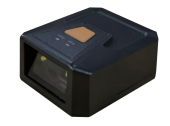
F51-XX | Self-service Machine | DP: Industrial application scenarios | 52.6 mm ×45.5mm × 26 mm | |
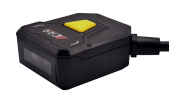
F50-XX | Self-service Machine | Self-service machine application scenarios for small space: | 45.1*37.6*18.5mm |
|
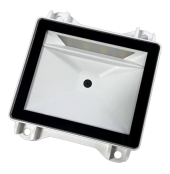
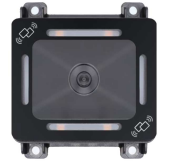
MF22 | Self-service Machine, Gate | Strong paper code reading ability, compatible with screen code reading | 61.0*64.8*23.1mm | |
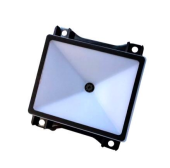
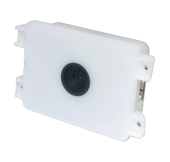
MF26P | Self-service Machine, Gate | Cost-effective version, high mobility adaptability, strong backlight code reading ability | 64.5(W)x 60(D) x30(H)mm |
|
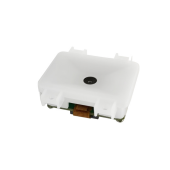
MF28 | Self-service Machine, Gate | Code scanning + NFC | 61(W)×64.8(D)×26(H) |
|
MF20 | Face Recognition Machine, Self-service Machine | Small size, high mobility adaptability, strong backlight code reading ability | 53.6*33.5*16.2m | |
MF21 | Face Recognition Machine, Self-service Machine | Smaller size version of MF20 | 35.2*33.2*15.5mm |
|
MB23 | Face Recognition Machine, Self-service Machine, Cash Register | Ultra-thin code reader, high mobility adaptability, strong backlight code reading | 21.5mm*8.8mm*7.0mm |
|
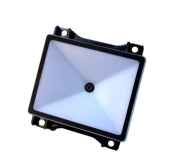
MF61 | Self-service Cash Register | Large window, high mobility adaptability, strong 1D code reading ability | 113*93*45mm | |
|
ABOUT US

PRODUCT
Solution
SERVICES
NEWS